




Staff training is the process of business organization of activities aimed at improving the knowledge, skills – capacity to work for workers. The goal of the training is to help employees adapt to work, professional development effectively contribute to the overall objectives of the organization.
According to the report “Workplace Learning Report 2024” of LinkedIn, have to 89% hr leader in the Asia – pacific, said the staff training and workforce development is a top priority to retain talent, improve productivity. At the same time, reported by Gallup indicated that the trained staff often have levels associated with job 2-fold higher compared with the group not supported skills development.
The actual at the Vietnam business shows, many units still have no process for training personnel clearly, the lack of platform to digitize or evaluate the effectiveness of training leads to a situation of much investment, but does not bring results as expected.
This article LV SureHCS will help the business understand: training hr, what is the step by step guide building training program from the analysis identify training needsbuilding plans to deploy effective measurement. In particular, the article also hints template training procedures for staff help you immediately apply to your business.
1. Staff training is what?
Staff training is the process of business organization activities help employees to improve their knowledge, skills and attitudes to better meet the request of current job or prepare for higher position in the future. This is an integral part in the development strategy, internal resources, help the organization remain competitive, the flexibility in the context of constantly changing market.
In the perspective of governance, training is not merely send people go to school or organizing a class internal. It is a chain of activity that the system starts from the correct identification of training needs, planning, organization and implementation especially effective measurement is a quantitative way of. For example, a manufacturing enterprise to improve productivity can design a training programme on 5S, Kaizen or skills to operate new machinery for the technical team, but if no measure is the change in the production efficiency after training, then that investment is still lack of strategy.
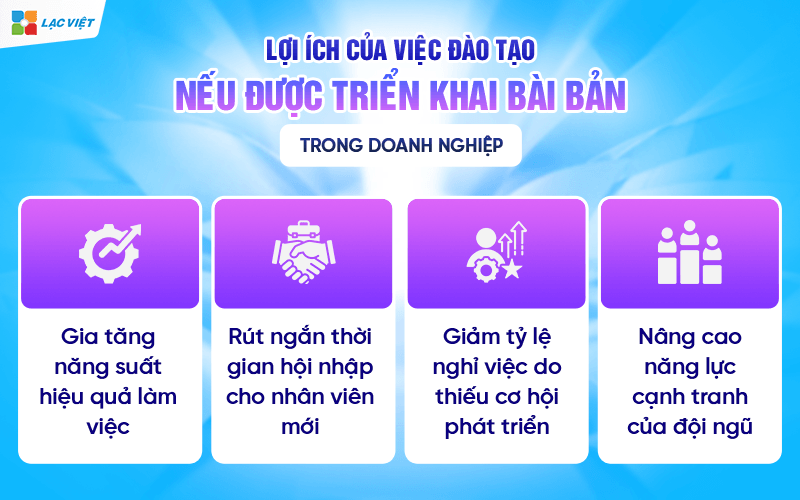
Benefits of training if deployed, it is extremely pronounced:
- Increase productivity and work efficiency
- Shorten integration time for new employees
- Reduce the rate of absenteeism due to lack of development opportunities
- Enhance the competitiveness of the team, the organization
Invest in training, not only is the cost of that is profitable investments for business if you know how to implement the right the method of training and development in hr with tools appropriate management.
2. The form of training employees currently popular
Choosing the right form of training not only helps business to optimize costs, but also improve the efficiency of the collection of employees. Here are four forms of employee training is commonly applied today match each target scale business different.
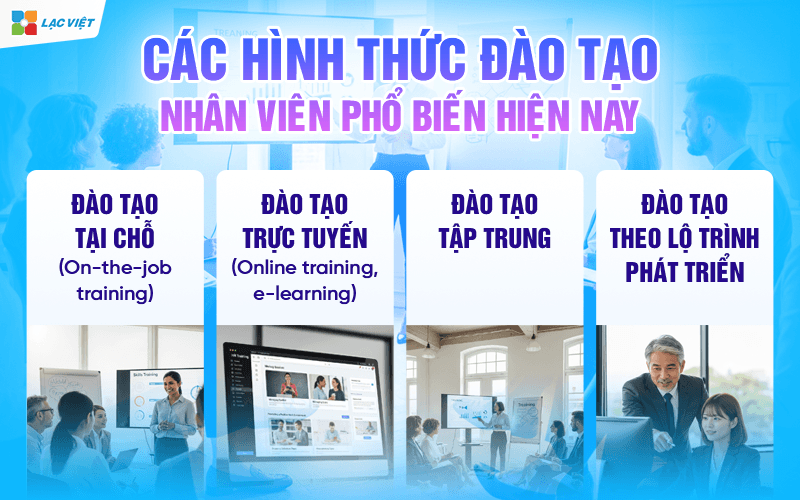
2.1. On-site training (On-the-job training)
Spot training is a form of direct instruction right at the place of work, usually applied for new employees or when there is a change process and equipment. For example, in a factory, the team leader will guide the workers how to operate the new machinery on the production line. Similarly, a bookkeeper can be a new person in charge of the old minder directly through the actual business daily.
Practical examples:
- A salesperson will guide the process of communicating with customers at the store right in the work first.
- In the field of accounting, new employees can be practice data entry on the accounting software with the support of the instructions in each profession-specific.
- With the technique, the process of “hand only” on machinery or equipment, new technology is a form of mandatory training to ensure safety and performance.
Advantages:
- Save time cost, do not need to detach from the actual work.
- Help employees quickly become familiar with the working environment real.
- Training content with real-life situations, easy-to-apply now.
Restrictions:
- Teen rating system: Do not have standardized content, so the effectiveness of training depends on each person guide.
- Risks lack of synchronization: If there is no model training procedures clearly, conveying knowledge can standard deviation or missing important information.
- Hard extension: this form is not enough to cover the training program, human resources, large-scale or soft skill training needs discussion, simulation.
This form is consistent with the integration phase the staff and the location have the process repeat obviously. However, to maintain the quality of long-term business should be combined with the training program standardized or model construction process, staff training, accompanying documentation specific.
2.2. Online training (Online training, e-learning)
Online training is a form of learning through digital platforms, allowing employees to access documents, videos, courses remotely. This form is in accordance with the business has a team of the spanning many branches, working remotely or need training personnel periodically with optimal cost.
Real life situation:
- A technology company development course “basic network Security” for the entire staff through the LMS system.
- A retail conglomerate organization, training, communication skills for 2,000 employees nationwide through e-learning platform integrated quiz, exercises, videos, simulation situation.
Practical benefits business get
- Save the cost of training: 't need to hire trainers, venue, printing documents.
Active time: Employees learn to time in accordance with the individual schedule. - Easy progress control: Businesses can track the number of school completion rate, review score of each individual through the dashboard.
- Standardized knowledge system: A content built 1 times may be used repeatedly for training courses new very suitable in the process of training personnel periodically repeated.
Points to note when deploying
- Not suitable with all kinds of skills: The skills needed interactive simulation directly (such as conflict resolution, presentation in front of a crowd...) should still be focused training.
- Technological barriers: A number of older employees, or less exposure to technology will be difficult if platform LMS not friendly.
- Lack of motivation self-study: If there is no way to build pathways clear and check periodically, employees may give up halfway.
Advanced hint effective deployment
- Options training software have the ability to personalize the roadmap according to the power input of employees.
- Combine online training with survey after the course, app reviews in the work to test the actual effectiveness.
- Using gamification (game culture), charts, certificates... to increase the attractiveness.
This form helps easy business process design, personnel training flexible, can be customized according to each location, department or need additional skills. Businesses can also build process, employee training standards, with full documentation, tutorials reviews to ensure that training really create value for learners and for business.
2.3. Training focus: Create background knowledge, sync, enhance internal connection
Training is organized form of live classes at a specific location with the simultaneous participation of many students often due to the lecturer or experts outside the classroom. This is the traditional pattern still exert high efficiency in the training programs, soft skills, corporate culture or topics that need focus group discussion, simulation situation.
Common situations:
- Organized training classes skills leadership for the group, chief room in the zoning plan human resources.
- Business organization workshop focused 2 day at the office total to training on business culture for new employees system-wide.
- Sales department are invited to join the training class negotiation skills and customer care by specialist external training teaching.
Benefits application this form for business
- Message transmission strategy: Help leaders expressed orientation, core values through direct interaction.
- Strengthen human connection: Employees from different parts have the opportunity to exchange experience.
- Create experience powerful learning: taking direct inspiration, increase concentration to remember.
Challenges when deploying
- Cost held high: Due to cost of venues, trainers, food and accommodation if there are personnel from attending.
- Interrupted work: When the whole group to join training, can cause temporary shortage of the operation.
- Difficult to measure efficiency after training: If there is no process for training personnel standardized accompanied by reviews, the business can't know whether knowledge can be practical application or not.
Suggestions to enhance efficiency
Combined training with the system test before – after class to measure the level of acquisition.
Design the program according to model processes, staff training, in particular, the standard document and interactive activities simulate real work. After training, HR should organize the follow-up to measure app improvements planned next training.
2.4. Training according to the development roadmap: Mount training with strategic human resources long-term
Training according to the schedule development (development path training) is a form of construction planning, employee training the long-term for each position based hr competency framework, career goals, and the development direction of the organization. This form of training, often deeply integrated into the process of training personnel of the enterprise or business is focus on training human resources successor.
Typical situation:
- Staff the business is construction of the roadmap include: 3 months training skills, basic sales → 6 months of training, negotiation skills advanced → 1 year after training, team management business.
- The accounting department is decentralized training level: enter data → data analysis → internal control → financial management.
Enterprise value received
- Optimize resources training: Training the right focus, save time cost thanks to clear directions.
- Motivation personal development: Human, see route advance will take the initiative in learning, long-term commitment.
- Mount training with hr strategies: Help business planning, hr successor, standardized competencies for each level.
Implementation challenges
- Requires data system personnel clear: Needs analysis, competency assessment periodically to build the suitable route.
- Depending on platform technology: If the lack of software or system, LMS support, tracking progress, adjust the route will craft and poorly effective.
- Need time resources deployed: This is not the solution “instant” that needs long-term commitment from the business.
Recommendations for successful implementation
- Application software LMS integrated functional building roadmap automatic training.
- Standardize the process of training employees for each position/rank to make the platform deployed.
- Combination of online learning, classroom practice and coaching 1-1 according to each stage of development.
3. Process training the post for business
A training program effective personnel can not be separated from a standardized processes. Instead of just organizing the course discrete demand immediate business need to build a process for training personnel clear, measurable continuous improvement. Here are 5 step foundation make up sample procedures, staff training, good apps for every type of business from medium to large.
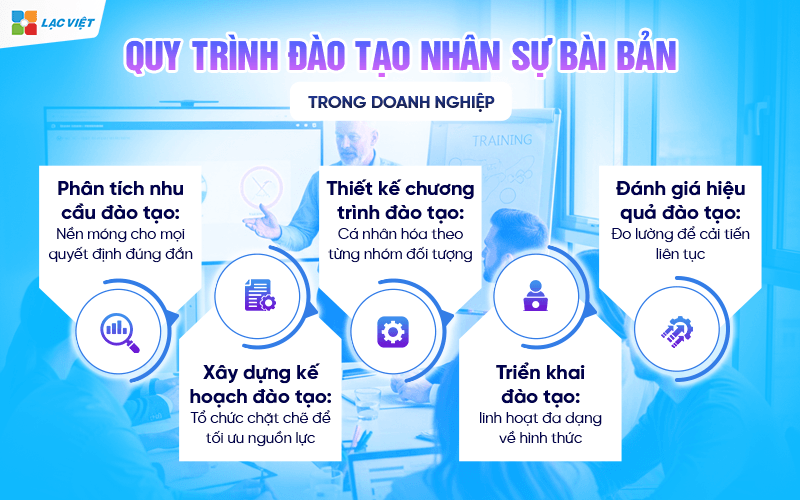
Step 1. Needs analysis training: the foundation for every decision correct
Before embarking on the training, the first important thing is to properly identify training needs. This can't rely on feelings that need to rely on data current capability of personnel and development goals of the business.
There are 3 angles common to analyze:
- Talent gap: comparison between current capability and capacity standards of each location. For example, if the employee business has not yet proficient skill refuse disposal, this is hole training required.
- Target job: When business expand the market, the need for training personnel to meet the requirements of new knowledge, products, or processes.
Strategic long-term development: Business is preparing planning team planning design approach, need to build training programs leadership skills for the group potential.
The needs analysis, it helps avoid the “training set” to ensure each training activities are oriented towards specific goals clearly measurable.
Step 2. Build training plans: Held tightly to optimize resources
After clearly identifying needs, business needs specific chemical training plan details. Here is the step of bringing management to ensure resources are used effectively and the program is not overlapping.
The plan should include the following elements:
- Training content: Identify the topic, learning goal orientation, knowledge/ skills need to achieve.
- Subjects: new employee, team, technical expertise, management personnel, etc.
- Time & form: Lessons in how long, learn online or offline, organize according to class or in small groups.
- Budget: includes the cost of instructors, materials, software, support or platform LMS.
- Person in charge: Who is responsible for implementing, monitoring and evaluating effective.
A specific plan to help businesses control the progress, budget allocations reasonable assurance processes, personnel training go smoothly, from preparation to implementation.
Step 3. Design training program: Personal goods according to each group of objects
Design the training program should not be “one for all”. Each group hr job characteristics, level of development goals are different, therefore need the content approach separately.
For example:
- New staff: Need program onboarding standardized, learn about corporate culture, work processes basic and responsible position.
- Technician: Requires intensive training of the production process, use machines, ensure safety.
- Middle managers: Need to improve leadership skills, internal communication, performance management, planning.
A program good design will satisfy winning the needs of each group, to help staff the same time increase the practical application rather than theory away from work.
Step 4. Deployment flexibility training, diverse in form
Businesses today are no longer restricted by traditional classroom. The deployment of training can incorporate diverse forms for maximum efficiency, saving cost:
- Training offline focus: matching courses that require direct interaction, group discussion, practice in place.
- E-learning: applying for theoretical content, helping students to learn anytime, anywhere. Especially effective with software, personnel training, integrated LMS.
- Coaching/Mentoring: a guide 1-1, help develop skills in depth or support personalized to each employee.
- Blended learning: combining learning online/offline trend are many businesses apply.
Depending on budget targets, the business should choose the form-fitting, avoid stereotypes, and ensure personnel are to access knowledge in the most efficient way.
Step 5. Evaluate the effectiveness of training: Measurement to continuous improvement
Training is only really effective when measurable results. This is a step many businesses forget, prompting the training of personnel lost their continuous improvement.
The assessment methodology downloads:
- Before – After training: test your knowledge/ skills before and after the course to compare the levels progress.
- Survey students: reviews, satisfaction level, the application, improvement suggestions from the school.
- Measuring job performance: the link training results with KPI, sales, productivity or feedback from superiors.
The reviews help the learning orientation more clearly, and help HR departments, process improvement, personnel training according to each cycle to ensure investment training brings real value to the business.
Download the whole template in the process of training employees AT THIS
4. The common challenges in human resources training in the traditional form
The process of training personnel in the enterprise, whether good goal, but not less units still faced many hurdles that training efforts become less effective or interruption. Here are three common challenges managers need to note:
4.1. Teen long term oriented, training, spreading
One of the most serious problems is the training takes place in a “short-term deal”. Ie business only class organization when problems arise or request latest time from the management level. This leads to:
- Loss of connection between training and development strategy, human resources.
- Staff finished school but not applied because of the lack of orientation to the next.
- Wasting time costs due to lack of link between the programs.
This is the consequence of the lack of model processes, staff training, standardized, as well as cute person in charge of training has the look long-term strategy.
4.2. Difficult to measure the actual efficiency
No little business to organize dozens of courses per year, but it is not clear whether that program can really bring change anything about power or performance work. No rating system clear, such as survey before and after training, progress reports, learning or KPI after the course, that managers fall into the “guessing” instead of making decisions based on data.
Practical training, human resources not only need to measure on the number of sessions held, but also need to assess the quality of content, level and ability of practical application of students.
4.3. Lack of tool control manager
Many businesses are still training management using Excel, email or the registration table manually. This leads to:
- Lost data training.
- Not able to track the route of learning of each individual.
- Take time to operate, so have to synthesize information from multiple sources.
In the context of human resources increasingly need to adapt quickly, not app technology makes the process of training personnel become obsolete and inefficient, especially with the business scale from 50 hr and above.
5. Solutions to improve effective business training in the transition period of
To solve thoroughly the barrier on, more and more organizations have turned to use management software training as a solution strategy. Here is the step switch essential if businesses want to raise competitiveness by humans.
Software's role as the central coordinating the entire operation, personnel training, help:
- Systematize the process of training: From step identify the needs and allocation of courses, training institutions to evaluate the results – all of which are set into the work flow clear.
- Digitize the entire training data: storing learning history, certificates, score, feedback... in each personnel easy access at any time.
- Track progress academic performance: managers can understand who is learning what, progress to where, who hasn't finished – help the timely adjustment.
- Evaluate the effectiveness focus: System to create visual reports about the quality of the course, level of involvement, the learning outcomes – decision support quick base.
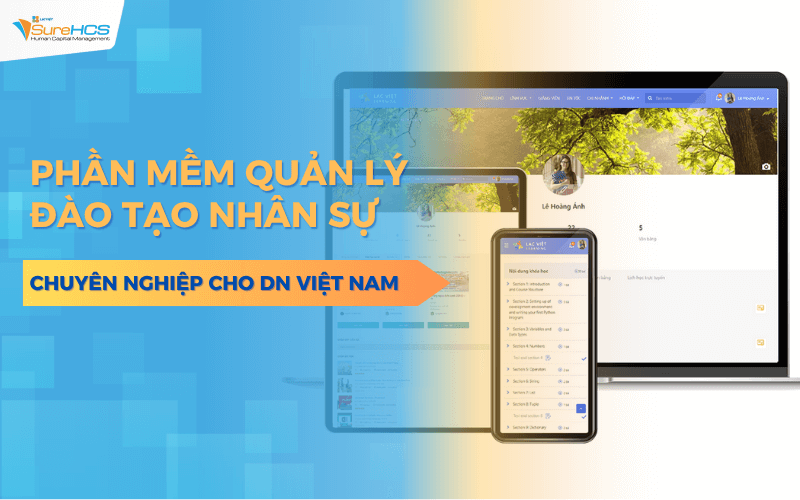
In particular, the modern platform integrated e-learning software for company management system, staff training (LMS), or LMS software for your business to help the school become flexible, easy to personalize.
If the business is looking for a comprehensive solution to standardize processes, personnel training, technology integration into learning management, capacity building team in a sustainable way, Lac Viet eLearning is choosing not to be missed. Developed by News corporation Lac Vietnam – units has over 30 years of experience in the field of business software, not only fully meet the requirements of a system LMS that is designed specifically for the needs internal training of business English.
LAC VIET E-LEARNING – SOLUTIONS, PERSONNEL TRAINING, INTERNAL BUSINESS PERFORMANCE MEASUREMENT
Lac Viet E-learning is the trusted choice of many large corporations such as FrieslandCampina, PV GAS, Shinhan Bank... with more than 100,000 users across the system.
LV E-Learning is not just a training system online, which is the platform that helps businesses build human capacity in a sustainable way. The solution is designed to solve the fulness of the problem: training – measurement – develop – retain talent in the work environment is great.
- Difference of LV E-Learning lies in the ability to combine flexibility between technology, learning experience and management training. Businesses can deploy according to the SaaS model or on-premise, easy to integrate with existing systems
- In compliance with the international standards such as SCORM, OpenBadges, ensuring standardized and scalable long term.
- Don't stop at the “bringing material up system,” LV E-Learning create learning environments multimodal: online class, learning materials, multimedia, forum for exchange of knowledge, exam – assessment – certificate automatically.
- The entire learning process of the employees are tracking, analysis, reporting in real time, to help businesses accurately assess the effectiveness of training and the level of capacity development.
- Modern interface, high security, automation, deep, ability to analyze training data to help businesses optimize the cost of training, improve work productivity, increase employee engagement.
SEE DETAILS MANAGEMENT FEATURES TRAINING LV E-LEARNING AT HERE
Ready to elevate effective internal training in your business?  Contact us Lac Viet today for advice model implementing E-Learning in accordance with the scale, industry and development goals of the business.
With version Cloud, LV E-learning can deploy fast in 7 daysno need to invest in infrastructure, high security and are willing to expand to tens of thousands of users.
SIGN UP TO RECEIVE DEMO NOW
CONTACT INFORMATION:
- Hotline: 0901 555 063
- Email: [email protected] | Website: https://www.surehcs.com/
- Office address: 23 Nguyen Thi Huynh, Phu Nhuan, ho chi minh CITY.CITY
From planning, training, organization class form (offline, online, blended learning), content management, lectures, track progress students to review results and train connection with development roadmap personnel, etc. are all integrated on a single platform at https://elearning.lacviet.vn.
A training program for employees, it not only helps hr professional, improve work productivity, but also contribute to building a culture of learning and a spirit of innovation within the organization. Business need to look at training activities as a long-term investment. If you are looking for a training platform reputation, performance appropriate to the specific enterprise see right solution at Lac Viet eLearning – The platform is designed exclusively for the needs, training, human resources direction, they digitized flexibility.