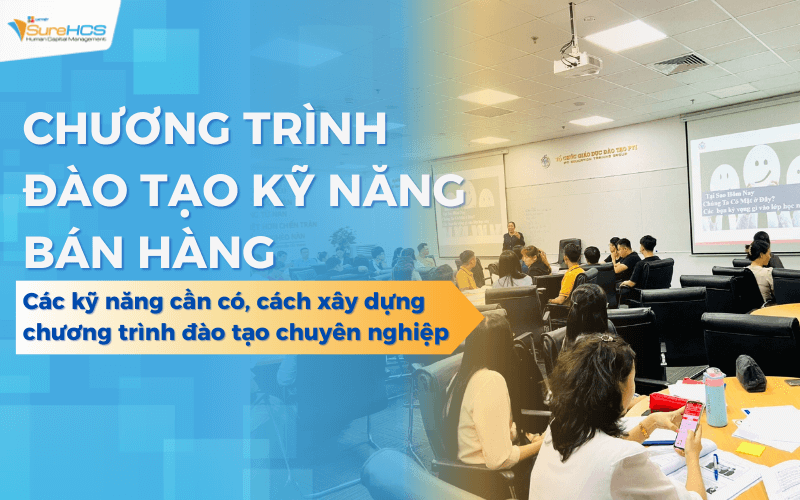






Internal training activity is organizing the training program, now in business in order to improve skills, knowledge and work performance of employees. This form of the business build, deploy, monitoring saves costs, in accordance with the actual needs contribute to promoting human resources development sustainable.
In the context of competition is increasingly fierce business needs a team of quality – understand the skills flexible to adapt to change. This explains why more and more institutions in Vietnam, especially small and medium enterprises focus on investing in the training team. In that internal training is a solution effective strategy.
Not only cost savings compared to hiring unit external, internal training also helps business owners, construction, and content in accordance with actual operating at the same time contribute to shape a culture of learning within your organization. However, not every enterprise is to understand the nature, the implementation process or the construction of a training plan effective internal and measure actual results.
This article Lac Viet SureHCS will help you understand the internal training is nothing to distinguish the forms of training other reasons should be deployed, especially to provide process training internal plan template internal training, hints, tools digitized training to help businesses deploy professional sync.
1. Internal training is what?
1.1. Concept and distinguish it from other forms of training other
Internal training (internal training) is the process of imparting knowledge, skill, attitude and for employees, the members of the organization in charge, is usually the manager, the department head, or who have deep expertise. This is a form of training common save when business use available resources to transmit content with practical work.
Other than training outsource – business need to invite experts or organizations external to teaching or courses at the center, internal training more flexible, easier to adjust content to fit each department.
For example, a manufacturing enterprise can organize internal training periodically for workers on the process of commissioning new machines, instead of having to sent to school at the center.
Internal training is also different forms of online learning, mass. Here, the content is “tailor-made” according to the actual business help staff the right apps at work.
1.2. Why businesses need to implement internal training?
Implement internal training is not only the right thing to do, which is inevitable if the business wants to sustainable development. Here are the practical value:
- Retaining workers the good: Staff feel is development and investment will tend to stick more permanent. A training program, it also helps build the roadmap profession clear that generation of young workers special interest.
- Reduced recruitment costs, improving the efficiency use of resources: Instead of recruiting new to meet skills shortages, internal training helps to “upgrade” the existing resources, while saving ensure both understanding the corporate culture.
- Synchronization-knowledge – skills – attitude: A training program good internal can help the entire team to operate according to the same standards, reducing deviations in processes, increase collaboration related departments.
- React quickly to market changes: When there are new products, new processes or operating requirements change, businesses can deploy training immediately, not dependent on outside.
In summary, internal training is not only complementary activities that should be recognized as a part of strategic development in the long term. In the next part, we will learn the process of internal training efficiency, building plan template internal training, as well as the digitizing tool to help businesses deploy basically more professional.
2. Training procedures for effective internal
A training program internal success cannot come from improvisation improvisation, which requires a process, it is associated with the development goals of the business. Here are four key steps in the process of internal training company that organizations need to make to ensure training effectiveness measurement is.
Step 1. Analysis of training needs for each department, location
Every job position has the required skills, different knowledge. Therefore, the first step in the process of internal training is to analyze properly the actual needs.
For example, the sales department should be fostering skills to negotiate and close the sale during the accounting need updates new knowledge about accounting standards or ERP system.
Training needs should not be applied for the whole company, which need to be analyzed based on:
- Results of capacity assessment periodically.
- Report performance indicators (KPIs) of each of the individuals/departments.
- The changes in business strategy, system or product.
A needs analysis will exactly help businesses avoid wasting time cost for the training content is not really necessary.
Step 2. Planning training have a clear goal
After you have determined the needs, business needs, building plan template internal training specific to the following factors:
- Training goals specific measurable: For example, after training, communication skills, staff CCU need to improve customer satisfaction from 80% to 90% within 2 months.
- Time, location, form of training: Training at the office? Learning through e-learning system? Or a combination of both?
- Training budget: includes the cost of document preparation, hours of instruction of the faculty, support tools, software,...
The plan details to help businesses not only actively coordinating resources, but also create favorable conditions for the evaluation of effectiveness of training after this.
Step 3. Design program select faculty internal fit
A program of training not only include the necessary content, but also need to fit on teaching methods, people impart.
- Training content: Should be built to keep abreast with the actual work every day, avoid theoretical dry hard. For example: Instead of saying “skills time management”, instruct employees how to use task management like Trello or CoDX Task on the fact that each work shift.
- Form of training: Should be varied training directly at the meeting room, integrating e-learning software, internal training or practice in place.
- Faculty internal: ideally, people just have strong expertise, just have the skills, communicated well and understood the context internally. The invited group leader or expert veteran class also helps to spread the culture of learning in internal efficiency.
Step 4. Deploy, monitor, measure training results
Many businesses invest more for training, but skipped most important stages: review of performance after training. A program is only truly successful if bring positive changes in performance or behavior work.
A number of methods to assess downloads:
- Model 4 levels of Kirkpatrick: reviews from the level of satisfaction of learners → ability to acquire knowledge → level apply to jobs → impact on organizational effectiveness.
- Calculate the ROI of training: compare the cost of training with the value after training. For example, employee productivity increased by 15% after 1 month training, sales.
Besides, should incorporate feedback surveys, monitoring data from system management training (LMS) or KPI after training to have a comprehensive view.
A process of internal training company, it will help enterprises save costs, optimize efficiency and proactive human resources development. Whether it is large or small business, the correct application of this process will create a solid foundation for a strategy of training the long-term
3. Sample internal training helps business to quickly deploy
After you have clearly identified needs – training procedures for the company, the next step is to transform the orientation that the plan specific training, a material indispensable to ensure the training program is enforcing consistency, transparency measure is effective.
Below are the integral components:
- Training goals: goals should be specific, quantifiable, and associated with outputs. For example: “advanced skills handling customer feedback, aiming to increase the level of satisfaction up to 90% in the next quarter.”
- Subjects of training: specify the department, work location, or team personnel involved. Identifying the right audience helps the training content the fact avoid wasting resources.
- Time form of training: Duration of training should be consistent with the operation schedule of the business, can be flexibly between the direct form or e-learning. Use software internal training will help businesses easily control the schedule and progress.
- Content main training: Need to be divided according to each thematic, skills, or specific process. For example: “communication Skills via phone – 2 the manual CRM software – 1 sessions.”
- Training budget: include expenses for faculty (if outsourced), documents, software, training management, cost tool support...
- Measurement indicator (KPI): To assess the effect after training, can apply indicators such as: percentage of completion of the course, review score at the end of the level to practically apply after 30 days...
4. Hint 1 a few theme training company common
Below are the topics internal training downloads is more enterprise deployments that enhance human capacity optimal operational efficiency within the organization. These topics can be selected adjusted according to the scale, field development goals and human resource strategy of every business.
| Training topics internal | Training content |
| Training for new employees (Onboarding) |
|
| Soft skill training |
|
| Skills training, leadership, management |
|
| Training professional |
|
| Training internal processes |
|
| Training digital transformation, and technology applications |
|
| Training, corporate culture and core values |
|
| Training compliance with laws, regulations, business |
|
5. Method internal training popular the most effective current
5.1. On-site training (On-the-job Training – OJT)
This is a form of training that staff at the location of his work under the direct guidance of the manager, colleague, veteran or expert internal. This method does not require the space separate class also do not need to pause work to organize the training that takes place in parallel with the activities operate every day.
For example: A new employee in the sales department will be observing the consultation call reality, is allowed to make a very small part in the process (call confirm, input, processing, feedback) under the direct supervision of the head of the group.
Practical benefits:
- Speed familiarize work: new Employees understand the processes, systems, tools peculiarities of the business in short time.
- Training aligns with reality: Not theoretical, far left, learners apply knowledge on the job.
- Save training costs: No need to hire trainers or organizations separate class.
- Contribute to building a culture of shared internally.
Limitations and solutions:
- Uneven quality without specific plan or guide who lack pedagogical skills.
- Business should be built-in model training procedures for employees in each location, there are evaluation criteria clear effect to control the quality.
5.2. Training through mentoring (Coaching – Mentoring)
Here is the method to develop personal power in the direction of “personalization”. Each employee is “tied” with a guide who is a manager, specialist or mentor internal. This process takes place throughout – from identifying capacity needs to improve to track progress and evaluate the results.
There are two common forms:
- Coaching: Focus on specific objectives (for example: advanced communication skills in 3 months).
- Mentoring: Focus on developing long-term (for example: building leadership capacity for the potential in 1 year).
Practical benefits:
- Intensive development of thinking skills, career orientation.
- Retain motivation for the better through chance contact with a mentor experienced.
- Promote a culture of learning and knowledge sharing in the organization.
Limitations and solutions:
- Time-consuming to manage if not allocated accordingly.
- Need to build a program mentor basically, for example, documentation, coaching, templates checklist progress reviews, feedback, periodic...
5.3. Training according to the model class internal (In-house Training)
Business organization of training sessions by topic, with students belonging to the same parts or the same level. Training content can come from faculty internal (HR department) or faculty outsource, depending on the nature of skill.
For example: A skills training “Handle objections from customers” for the business department, or “advanced reporting skills data analysis” for financial groups.
Practical benefits:
- Optimal training content according to the strategic objectives particular business.
- Create networking opportunities between the parts, strengthen team spirit.
- Easy deployment training plan periodic, measurable improvements through each tranche.
Limitations and solutions:
- Difficult to maintain quality if teachers internal teen pedagogical skills. Business should have previous training for teachers about methods of communication, interaction techniques class.
- Combined use software internal training to manage class schedules, performance evaluation and construction plan template internal training post more for each department.
5.4. Online training (E-learning internal)
Online training is a form of learning of chemistry in which training content is delivered through the technology platform as software training, internal system LMS for business or e-learning software for the company. Employees can access the repository study material, video lectures, interactive quizzes reviews... at any time, from any where.
How to implement:
- Library building internal courses on company culture, business processes, soft skills, professional skills.
- Organize the roadmap training personalization by location (sales, accounting, customer care...).
- Software application management course for personnel to management students, track progress evaluating the effectiveness of learning.
Enterprise value received:
- Save time cost significantly compared to traditional classroom (no cost room hire, document printing, move).
- Optimized experience the flexible learning,staff actively selected time, speed in accordance with the progress of the work.
- Easily standardize, maintain training content: digital content, goods that are quick update consistency.
- Measurement of learning outcomes clearly through reports, transcripts, test.
To promote efficiency, the business should choose the solution digitize internal training professional and has friendly interface, multi-device support (web, mobile) and integrated data analysis learning (learning analytics).
5.5. Training under the project (Action Learning)
This is the training methods associated with the practice, in which personnel are assigned to perform a real project or a problem to be solved, usually in small groups. During the deployment process, they will learn through the plan, assign tasks, handle situations, interact with the relevant departments.
How to implement:
- Project delivery really challenging matching levels of human capacity.
- Organization team from multiple departments to increase coordination cross.
- May mentor or tracking management support throughout the process.
- End of the project, review all of the results work and soft skills development.
Enterprise value received:
- Develop a comprehensive competency for personnel, especially the capacity for strategic thinking, team leader, time management, problem solving.
- Change your thinking “learning is the theory of” motivational learning practical and effective.
- Enhance the coordination ability between the parts, to promote thinking organizations get results-centered.
Note:
- In accordance with the hr team potential, middle – high level, capable of self-management.
- HR should play the role as the coordination, monitoring progress độphản feedback constantly to avoid deflection direction of the train.
5.6. Training model as 70-20-10
This model is famous in human resources management, built from the study of the center for Creative Leadership (Center for Creative Leadership – American). Accordingly, humans learn the most effective from:
- 70%: From the practical work experience (on-the-job learning).
- 20%: From others (managers, colleagues, mentor...).
- 10%: From the program, formal training (classroom, e-learning, workshop...).
How to implement internally:
Enterprises should design process internal training company based on this ratio by:
- Assigning challenging for personnel (for example: handle customer situations difficult, to head the project).
- Building mentoring or collaboration between the new staff and veteran.
- Organization of the training program, such as classes, e-learning, shared internally on a quarterly basis.
Practical benefits:
- Save on training costs, because the majority of knowledge is formed in the process of daily work.
- Increase the possibility of application knowledge, so content is not detached from the actual work.
- Building a culture of learning, endogenous, each person who is educated and guide for each other.
6. Software solution support internal training modern
In the context of business not only competitive products, but also on the quality of human resources, investing in solutions of chemistry internal training to become the inevitable trend. No longer are the training sessions discrete using Excel file, PowerPoint slides, or only notes, paper craft, software, training, internal modern allows to organize the entire process of internal training company, by the way, save time and easy to control.
- Optimize resources/duration: Software help enterprises shorten significantly in organizing, planning, allocation of faculty, as well as management trainees. Instead of taking weeks to send a mail invite to school, keep track of each person, who managed just few taps as possible to deploy course, automatically invite the right audience and track learning progress in real time.
- Measure training effectiveness intuitive: The software provides reports on completion rates, levels of engagement, assessment results at the end of the or survey after training. This is the “evidence of” helps leaders easily evaluate the efficiency of each program, from which improved or cut down the course does not bring practical value.
- The learning: Through the management system, staff training (LMS), each individual can be assigned a route private lessons depending on the job position, experience, or current capacity. This is a great advantage in the construction plan template internal training has high flexibility consistent with the strategy of human resource development's long-term business.
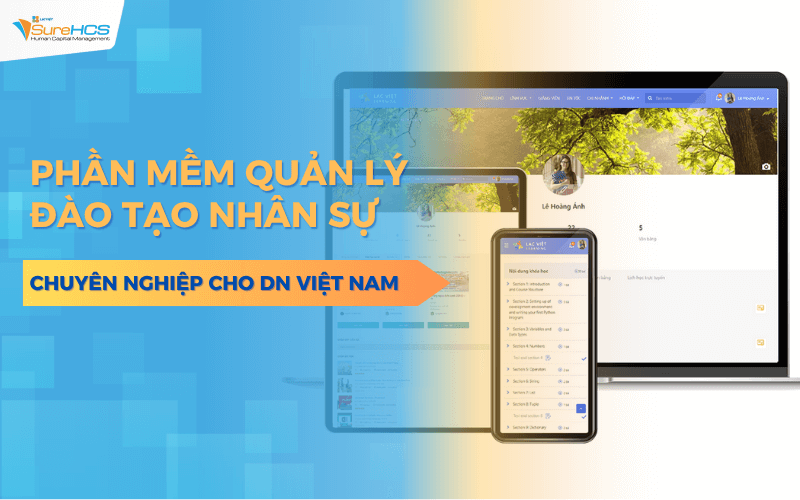
If the business is looking for a platform in accordance with the characteristics of the organization, Vietnamese, easy to deploy at a reasonable cost, Lac Viet eLearning is the option worth considering.
Feature highlights:
- Course management focus: set, classification management, hundreds of themed courses, skills, departments or rank personnel.
- Track progress assessment of the student: The manager can see right to report study results, test, or statistical activities according to each individual or group.
- Warehouse training material of products: the System allows the storage of diverse formats such as videos, PDF slides, quizzes... help faculty and staff to access anytime, anywhere.
- Flexible integration with hr software other: easily sync employee data profile, capacity, learning history through the system, HRM had.
Actual benefits that the business will receive:
- Save time cost training organization: 't need to hire a meeting room, moving expenses or printing material – all content are taking place on the digital space.
- Enhance the ability of self-education, development of personnel: Personnel can actively learning according to individual schedule, thereby improving the spirit of continuous learning, which is crucial to building a culture of learning internal.
- Fit all models business English: Whether SMES or large corporations, the platform Lac Viet eLearning are easy to extend customized according to actual needs.
To deploy internal training, it optimize efficiency, enterprises need a system management from planning, organization, training to track, evaluate the results. Software solutions training internally as Lac Viet E-learning will is the effective support tool to help businesses digitize the entire process, cost savings, enhanced learning experience, ensuring consistency in training.
Register free experience platform Lac E-learning to discover the right solution for your business.
Related questions
Build system internal training
Building systems, internal training is the process of designing and implementing the training program is held directly in the business aims to enhance capacity for staff. This process typically includes the steps of:
- Assess training needs: Identify the skills, knowledge missing in each work location.
- Build a training plan: Establishment objectives, content, method, time and training budget.
- Material design/material: Prepare the syllabus, slides, video, form assessment in accordance with each group of objects.
- Training organization: Can through the form of direct mentoring (coaching), E-learning or training under the project.
- Evaluate the effectiveness of training: Measurement results through the test, the feedback of students, job performance after training.
System internal training to help businesses proactively develop personnel in accordance with cultural organizational strategy.
Topics internal training
Businesses can deploy multiple training topics internal depending on the goals of human resource development. Some popular themes include:
- Training integration: Introduction culture, regulations, company policies for new employees.
- Soft skills: Communication, team work, problem solving, critical thinking.
- Professional service: Specialized knowledge such as accounting, sales, engineering, hr, etc.
- Skills management, leadershipFor middle managers, team or staff to inherit.
- Training switch number: Skills use the software, system, task management, data...
- Corporate culture, professional ethics
Choosing the right training topics will help to increase the practical value and improve work performance markedly.
Content of training new employees
Content training new staff (training) typically includes the following sections:
- Overview of business: History, vision and mission, core values.
- Organizational structure, management apparatus: Departments, functions and people involved directly.
- Rules, regulations, company: Hours of work outfits, vacation, used equipment, security of information.
- Personnel policy: Mode of salary, benefits, advancement, training.
- Workflow basics: Professional expertise related to the job position.
- Job skills required: Internal communication, tool use, work, work report.
Training for new employees to help them quickly adapt, reduce errors and help increase productivity from the early stages.