



The method of training and development in hr includes: on-site training and online training (E-learning) training, internal focus, tutoring – mentoring (coaching/mentoring), job rotation. Each method in accordance with each goal, the stage of development of employees in the enterprise.
Resource not only is a valuable asset but also is the vital factor to decide the sustainable development of every business. However, to the effective exploitation of human potential, businesses can't just stop at recruiting the right people, but also the need for continuous investment in training and development of personnel in a basically, have a strategy.
So currently there are various methods of training and staff development are commonly applied? Advantages and disadvantages of each method out? And where is the direction most consistent with the actual conditions of each organization? The article below Lac Viet SureHCS helps businesses to have a comprehensive view, most practical to build, strategy development, effective team.
1. Overview of the method of training and development
The method of training and development system is the way, models or tools that businesses use aims to enhance the capacity, skills, work attitude, adaptability of workers with job requirements and the long-term development.
No training method, which is optimal for every business. Choosing the right method depends on the goals, strategy, budgets, scale, personnel and internal culture. For example:
- Business startup need a quick, less expensive, such as training through mentor internal.
- Big corporations need the pattern depth as e-learning combines leadership training according to the schedule.
So, advantages and disadvantages of training methods must be considered carefully, based on realistic goals.
2. The methods of training and staff development in the popular business
2.1. On the job training (On-the-job Training)
On the job training (On-the-job Training – OJT) is a form of employees to learn, practice directly at the location of his work. The training process takes place through observation, instruction, mentoring, or job rotation helps employees master the practical skills quickly.

This is the most common method in Vietnamese enterprises, especially in the integration phase a new or advanced skills for the current team is.
For example, In a retail business, new employees will be directed directly at the counter by the supervisor or employee veteran to capture sales process, customer communication, use the POS system.
| Advantages | Restrictions |
|
|
Any business suit
- Small and medium enterprises (SME): want to save the cost of training, tapping internal experience.
- Business has the nature of work practice high: production, logistics, retail, customer service, hotel – restaurant.
- Business is in the stage of integrating new employees: Need to train fast to their rhythm work.
2.2. Training outside of work (Off-the-job Training)
Training outside of work (Off-the-job Training) is a training method takes place outside the work environment, practice. Employees are participating in the training program organized basically as internal courses, seminars, workshops, e-learning, blended learning (training match) or the program for the professional training provided.
The goal of this form is additional knowledge, new skills or develop leadership competencies – management help employees ready for the higher role in the future.
| Advantages | Restrictions |
|
|
Any business suit
- Big business or corporations: have the budget stability training, orientation and development long-term.
- Business in the field of knowledge: such as technology, finance, consulting, marketing – need to quickly update the market trend.
- Business focus on training our team of inheritance, management of medium – high level.
To optimize cost and effective tracking, businesses can combine training in addition to work with the pattern E-learning or Blended Learning through a system of Vietnam E-Learning help course management, capacity assessment, measuring the results of training transparency.
2.3. Online training (Online Learning / E-learning)
Online training (E-learning) is a learning method based on technology, in which employees can access the training content through online platforms such as LMS software (Learning Management System). This form allows students to learn anytime, anywhere, by many means such as computer, tablet, phone.
In Vietnam, E-learning is becoming the dominant trend in corporate training. Trends conversion of strong in training personnel when businesses need to optimize cost, time and the ability to measure the learning effect.
| Advantages | Restrictions |
|
|
Any business suit
- Businesses large-scale, multi-branch: Need training series, ensuring uniform content.
- Businesses are number conversion: Want standardized, archive and data management training focus.
- Small and medium enterprises (SME): Want to save cost but still maintain training activities regularly.
- Business has a team of dispersion: As a retail chain, F&B, logistics.
Businesses can deploy online training system through the Vietnam E-Learning – management software, internal training allows for course design flexibility, track progress, assess employee competencies comprehensively.
2.4. Coaching/Mentoring (mentoring – career orientation)
Coaching and Mentoring are two training methods, individualized, high focus on capacity development, thinking, orientation, long-term careers for employees.
- Coaching (Coaching): help employees improve work performance in the short term through setting a target-specific guide to action.
- Mentoring (mentor): focus, share experiences, orientation, career development, employee assistance, mature in his work and thought leadership.
| Advantages | Restrictions |
|
|
Any business suit
- Business, medium scale and large: Have management team, experienced professionals ready to take on the role of mentor/coach.
- Business oriented team development succession planning: Need to build a development program talent (Talent Development, Leadership Program).
- Business focused culture mounting: As the multinational corporations, technology companies, professional services high.
Business can incorporate Coaching – Mentoring system online training (LMS) to track progress, hosting plans, personal development (IDP), measure the level of goal accomplishment.
2.5. Training model as 70-20-10
Model 70-20-10 is one of the methods of training and development in the modern are many large corporations such as Google, IBM, Microsoft applied.
According to this model, the capacity of staff is based on:
- 70% from practical experience work (learning by doing),
- 20% from the learn, interact with colleagues, management
- 10% from formal training (courses, workshops, e-learning).
The highlight of this model is put the emphasis on learning through practical experience, instead of depending entirely on traditional classroom. This is the suitable approach in the era of “learning in the flow of work” – students now in the process of work.
| Advantages | Restrictions |
|
|
Any business suit
- Business-oriented long-term development: Want to build your team learn active flexibility.
- Organizational culture and knowledge sharing: For example, in the field of business technology, service, marketing.
- Business has a team of middle management strength: capable of instructions, feedback, motivation, learning for staff.
To deploy effective model 70-20-10, businesses should incorporate the learning management system (LMS) to track, store the results and measure the actual impact of the training activity of up performance work.
2.6. Internal training combined technology (Digital Learning & LMS)
Internal training combined technology or also called Digital Learning is the trend in modern training, in which the enterprise application technology platform (Learning Management System – LMS) to organize, manage and evaluate the entire operation staff training.

This method help the transition from traditional schooling to the learning of culture, where all processes such as course design, decentralized students, track progress, evaluate competencies are automated.
| Advantages | Restrictions |
|
|
Any business suit
- Enterprise-scale medium-to-large: Want standardized, centralized management of training activities.
- Organization-oriented conversion of: Just integrate training into the system, HRM, C&B or ERP.
- Enterprise branch, enterprise dispersion: As retail chains, banks, insurance, logistics conglomerate.
- Business focus on capacity development staff: Need to measure efficiency reports training transparency.
3. Criteria for method selection, training and development suitable for business
The selection of methods, proper training is a key factor determining the effective capacity development of personnel, the optimal investment costs. Many businesses today are still having difficulty choosing between the forms, such as internal training, E-learning or coaching personal guide to training status “many, but not hit”. A method of effective training to ensure a balance between the goal of human development and capabilities, the actual operating of the organization.
3.1. Based on training goals
Businesses need to clearly define the goal of training is to develop professional skills, enhance expertise, or capacity management.
- If the target is equipped manipulation skills or professional peculiarities, should apply internal training or mentoring directly (coaching) to ensure the high.
- If the goal is to impart knowledge platform, soft skills, or corporate culture, form of E-learning help standardize content, deployed for the entire system.
3.2. Based on the scale budget of the business
- Small and medium enterprises (SME) often have limited budget, so preferred form of internal training combined E-learning basic to cost savings, leveraging available resources.
- Big business and corporations in a multi-branch can invest in learning management system (LMS) to manage focus, personalize content, track learning progress of employees nationwide.
According to the report of LinkedIn Learning 2024, 78% of big business has invested in at least one training platform online to reduce operating costs and increase the possibility of active learning for staff.
3.3. Based on the level and the capacity of staff
Each group personnel have learning styles and different platforms:
- New staff need visual instructions, simple content → fit training online or mentoring in place.
- Staff have the experience or position, professional need to update new knowledge → should incorporate E-learning enhanced with workshop intensive exchange.
Business can internal survey or use great power input (skill gap analysis) to determine the form of the appropriate training for each object, avoid the waste of resources.
3.4. The level of readiness application technology of business
The development of technology training in particular the system of E-learning, LMS and AI Learning Analytics are opening up new opportunities for business in the personalization optimal learning effect. However, not any organization is also ready to switch.
- If the business has the foundation of a sustainable, so investing in E-learning solutions, comprehensive to automate the management of classes, tests, report results.
- If the business is not familiar with technology, can start by pattern matching (Blended Learning) – recently held training directly, just use video lectures online to maintain the flexibility.
3.5. Combination suggestions for business optimization Vietnam
With peculiar diversity of scale/domain, Vietnamese enterprises should combine 3 methods: internal training + E-learning + coaching small group.
- Internal training: impart practical knowledge, increase cohesion team.
- E-learning: expanding the ability to study anywhere, anytime, saving costs.
- Coaching small groups: help personalize route capacity development.
This combination not only helps business to optimize costs, but also create learning environment (continuous learning) platforms important to develop a team of high-quality personnel, meet your goals of sustainable growth in the digital era.
4. Steps to implement training programs and staff development efficiency
Training and development personnel only really effective when deployed as a scientific process, have clear objectives, be specific measurement. Therefore, compliance with the implementation steps, it is a prerequisite to ensure training programs meet the practical effect and is associated with the development strategy of the business.
Step 1. Needs analysis training
Here is the step platform to help businesses identify employees need to be trained in what? why need training? This process often includes the assessment of work performance current, gap analysis competency (skill gap), collated with the strategic objectives of the organization.
For example: If the business aims to expand international market, the demand for foreign language training, negotiation skills, knowledge of international legal need is a priority.
Step 2. Determine goals and KPI reviews the effectiveness of training
After understanding the demand, businesses need to transform these goals into specific targets (KPI) to measure. The target can be determined according to the principles of SMART (Specific – measurable – attainable – Relevant – for a limited time).
For example: “After my training skills, sales average number of employees increased by 15% within 3 months”.
KPI in training may include:
- The rate of course completion;
- The level of satisfaction of students;
- Rates apply knowledge in work;
- Business performance after training.
The set KPI helps the organizations and enterprises are to find out information about the method of training and development personnel have the facility to measure and improve the program in a quantitative, rather than emotional.
Step 3. Design and content, choosing methods appropriate training
Training content should be designed based on the peculiarities of work, human capacity and organizational goals. In parallel, enterprises need to select the method appropriate training can be internal training, E-learning, coaching, or blended learning (a combination of live and online).
A trend that is gaining more business Vietnam to apply is to use the system, learning management system (LMS) to build, store, track courses. According to the report by Global Market Insights (2024) market LMS global reach values more than $ 23 billion, reflecting the tendency to switch out strong in the training of personnel.
Step 4. Training organization combining diverse forms of learning
In this step, enterprises need to deploy the training according to the plan, ensuring flexibility and highly interactive.
Some common forms:
- Live training (On-the-job training): Help employees learn through practical work, in accordance with the skills specific expertise.
- Online training (E-learning): cost savings, business suit has many branches or workforce disperse.
- Workshop, Seminar: Increase the exchange and sharing of experience between the staff.
Businesses can combine many forms to improve efficiency. Such organization, workshop follows each course E-learning for staff to apply their knowledge in real-life situations, help remember wield better.
Step 5. Reviews continuous improvement
This stage is important to help businesses measure the degree of achievement of training goals and find out where to improve.
A number of measurement tools downloads:
- The evaluation model Kirkpatrick 4 levels: Measured from the reaction of students to impact actual trading results.
- Software LMS integrated report learning: tracking the percentage of completion of the course, review score feedback.
For example, the system Vietnam E-Learning in the ecosystem SureHCS allows businesses to automate the process of capacity assessment reports training effect in real time, help managers easily improve the content and method.
A training program effective personnel not only impart knowledge, but also to create real transformation in behavior, work performance of employees. When businesses implement the right process, training will become leverage internal development, reducing the cost of hiring new rate increase retain talent.
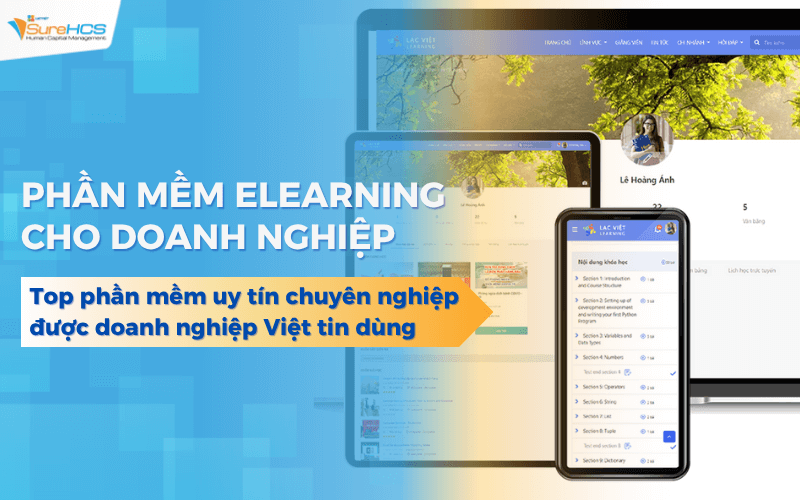
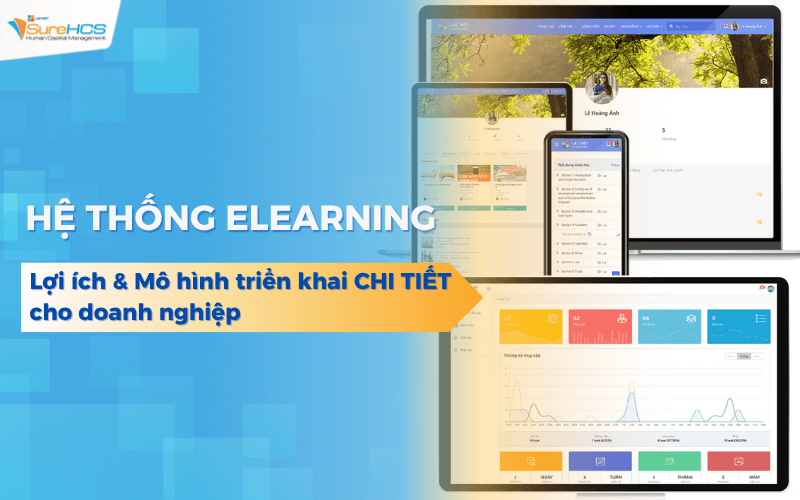
5. Solution digitized, personnel training, comprehensive with Lac Viet Elearning
In the context of business are strong to pattern modern management, training needs, internal flexibility, savings and measurable efficiency is becoming increasingly urgent. The application of a software platform for training personnel such as Vietnam Elearning bring business benefits pronounced:
- Standardize the whole process of training: Instead of depending on material discrete or training sessions not homogeneous, the software allows business building system lectures, electronic, standardized, easy-to-access, easy-to-update can be used repeat for many hr team different.
- Flexibility in time and space learning: Employees can learn anytime, anywhere on the online platform, even when working remotely, saving significant costs organized layers, document printing, move and faculty.
- Personalization roadmap development: Each employee will have a roadmap own learning based on titles, ranks or skill missing instead of applying a general program for the entire organization.
- Enhanced proactive self-learning: With interactive lessons, videos, vivid illustrations, multiple-choice questions with immediate feedback, the software creates a motivation for our staff to enhance capacity without waiting for focused training.
LẠC VIỆT E-LEARNING – GIẢI PHÁP ĐÀO TẠO NHÂN SỰ NỘI BỘ DOANH NGHIỆP ĐO LƯỜNG HIỆU QUẢ
Vietnam E-learning là lựa chọn tin cậy của nhiều tập đoàn lớn như FrieslandCampina, PV GAS, Shinhan Bank… với hơn 100.000 người dùng trên toàn hệ thống.
Lạc Việt E-Learning không chỉ là một hệ thống đào tạo trực tuyến, mà là nền tảng giúp doanh nghiệp xây dựng năng lực con người một cách bền vững. Giải pháp được thiết kế để giải quyết trọn vẹn bài toán: đào tạo – đo lường – phát triển – giữ chân nhân tài trong môi trường làm việc hiện đại.
- Điểm khác biệt của Lạc Việt E-Learning nằm ở khả năng kết hợp linh hoạt giữa công nghệ, trải nghiệm học tập và quản trị đào tạo. Doanh nghiệp có thể triển khai theo mô hình SaaS hoặc on-premise, dễ dàng tích hợp với các hệ thống hiện có
- Tuân thủ các chuẩn quốc tế như SCORM, OpenBadges, đảm bảo tính chuẩn hóa và khả năng mở rộng lâu dài.
- Không dừng ở việc “đưa tài liệu lên hệ thống”, Lạc Việt E-Learning tạo ra môi trường học tập đa phương thức: lớp học online, học liệu đa phương tiện, diễn đàn – wiki trao đổi kiến thức, thi – đánh giá – cấp chứng chỉ tự động.
- Toàn bộ quá trình học tập của nhân viên được theo dõi, phân tích báo cáo theo thời gian thực, giúp doanh nghiệp đánh giá chính xác hiệu quả đào tạo và mức độ phát triển năng lực.
- Giao diện hiện đại, bảo mật cao, tự động hóa sâu, khả năng phân tích dữ liệu đào tạo giúp doanh nghiệp tối ưu chi phí đào tạo, nâng cao năng suất làm việc, gia tăng sự gắn kết của nhân viên.
XEM CHI TIẾT TÍNH NĂNG QUẢN LÝ ĐÀO TẠO LẠC VIỆT E-LEARNING TẠI ĐÂY
Sẵn sàng nâng tầm hiệu quả đào tạo nội bộ trong doanh nghiệp của bạn?  Liên hệ Lạc Việt ngay hôm nay để được tư vấn mô hình triển khai E-Learning phù hợp với quy mô, ngành nghề và mục tiêu phát triển của doanh nghiệp.
Với phiên bản Cloud, Lạc Việt E-learning có thể triển khai nhanh trong 7 ngày, không cần đầu tư hạ tầng, bảo mật cao và sẵn sàng mở rộng cho hàng chục nghìn người dùng.
SIGN UP TO RECEIVE DEMO NOW
CONTACT INFORMATION:
- Hotline: 0901 555 063
- Email: [email protected] | Website: https://www.surehcs.com/
- Office address: 23 Nguyen Thi Huynh, Phu Nhuan, ho chi minh CITY.CITY

Choose the method appropriate training not only helps to improve skills working performance of employees, but also create a culture of active learning in the organization. Whether applying traditional methods or modern, directly or digitized, it is important that businesses need to clearly define goals, roadmap, and measure training effectiveness in a serious way.
If you are looking for a comprehensive solution to deploy training program, a basically saving, easy to control, let's experience right training software online Vietnam E learning – training software is designed exclusively for business to help you build strong team, flexible, always ready to adapt in every period conversion.


![Mẫu đánh giá thử việc chuẩn nhất 2025 [Tải miễn phí, dễ tùy chỉnh]](https://www.surehcs.com/wp-content/uploads/2025/07/mau-danh-gia-thu-viec-chuyen-nghiep.png)